
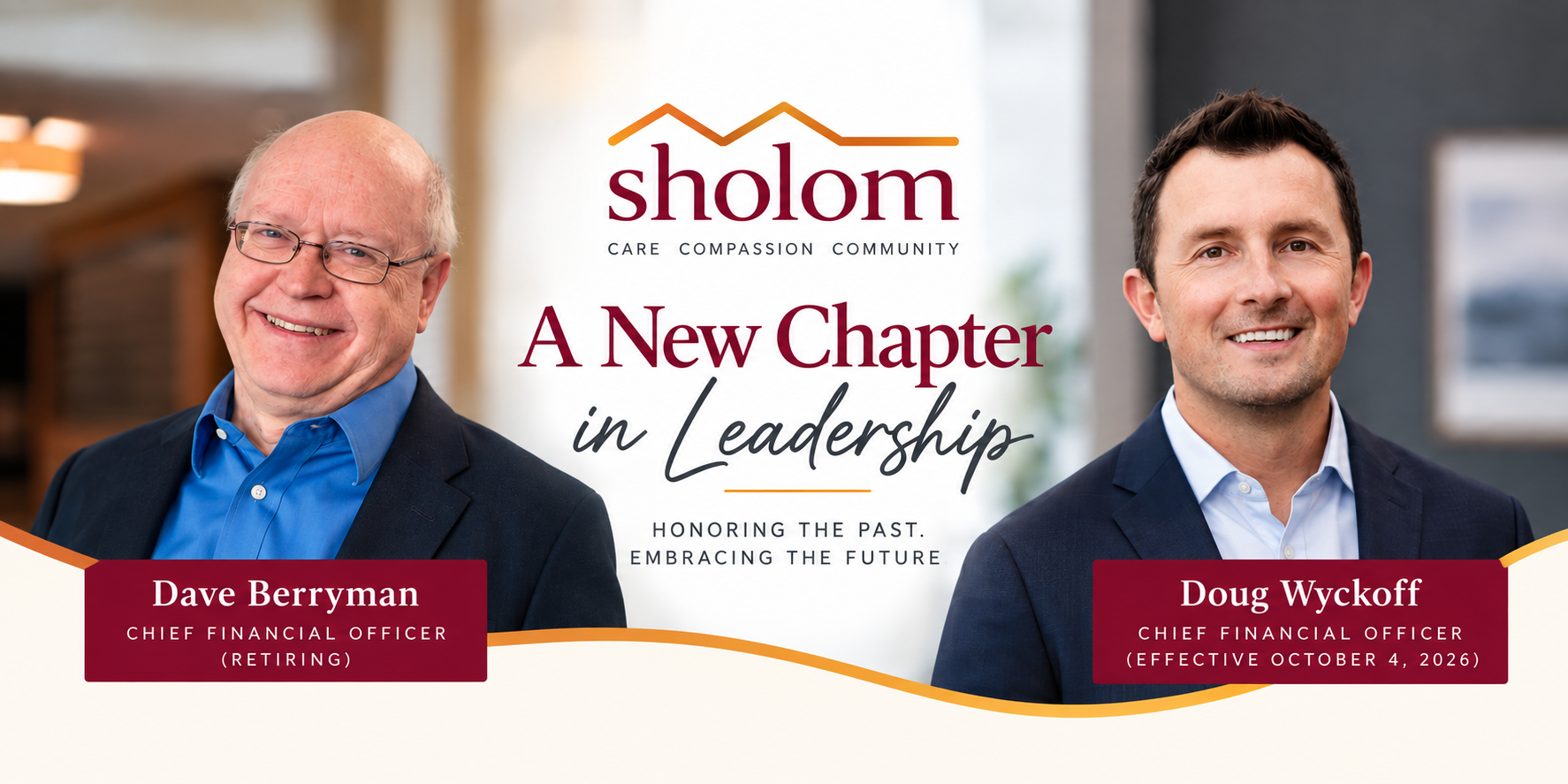
Strong leadership and thoughtful stewardship have helped Sholom serve our community for generations. As we look toward the future, we are proud to recognize an important leadership transition within our organization—one that celebrates more than a decade of dedicated service while welcoming the next chapter of Sholom’s financial leadership.
Celebrating Dave Berryman’s More Than 10 Years of Service
After more than 10 years of dedicated service to Sholom, Dave Berryman, Chief Financial Officer, will retire effective October 2, 2026.
Throughout his tenure, Dave has been an integral part of Sholom’s leadership team, providing steady financial guidance and helping strengthen the organization for the future.
Among his many contributions, Dave led the refinancing and restructuring of Sholom’s debt obligations, resulting in significant savings and strengthening the organization’s long-term financial position. He also led the sale of the Menorah Plaza apartment building, a significant transaction that generated critical resources for reinvestment in Sholom’s infrastructure.
Perhaps no period better demonstrated the importance of strong financial leadership than the COVID-19 pandemic. During one of the most challenging times in Sholom’s history, Dave helped navigate the significant financial pressures facing senior care organizations while helping ensure Sholom remained financially sound and positioned to continue serving residents, families and our broader community.
Beyond these accomplishments, Dave has been a trusted colleague and business partner to Sholom’s leadership, Board of Directors and staff. His calm, thoughtful approach, extensive knowledge and commitment to responsible financial stewardship have made a lasting impact on our organization.
We are deeply grateful for Dave’s many contributions to Sholom and wish him all the best as he begins a well-earned retirement.
Welcoming Doug Wyckoff as Chief Financial Officer
As we celebrate Dave’s contributions, we are also pleased to announce that Doug Wyckoff, currently Sholom’s Vice President of Finance, will become Chief Financial Officer effective October 4, 2026.
Doug’s appointment provides important continuity for Sholom while bringing extensive senior living financial experience to the CFO role.
A certified public accountant, Doug has more than 15 years of experience in the senior living industry—including 12 years at Sholom. Prior to joining Sholom, he was part of the health care assurance team at CliftonLarsonAllen.
During his years at Sholom, Doug has developed a deep understanding of our organization, financial operations and strategic priorities. He has strengthened internal controls and financial policies, helped lead several major system implementations and grant reporting processes, and serves as the financial liaison to Sholom Foundation.
Under Doug’s leadership, Sholom’s finance department has also maintained a long-tenured team and a strong track record of clean audits and compliance.
His knowledge of Sholom, combined with his financial expertise and extensive senior living experience, will provide valuable continuity as our organization continues to evolve, invest and plan for the future.
Continuing Our Commitment to the Future
Leadership transitions provide an opportunity to recognize where we have been while looking ahead to where we are going.
We are incredibly grateful to Dave for the leadership, partnership and dedication he has given Sholom throughout more than a decade of service. At the same time, we are excited to welcome Doug into his new role and for the experience, institutional knowledge and commitment he brings to this next chapter.
Please join us in thanking Dave Berryman for his outstanding service to Sholom and congratulating Doug Wyckoff on his appointment as Chief Financial Officer.
Honoring the past. Embracing the future. Together, we continue building a strong Sholom for generations to come.
